XIN

the fragility of memories fail to
prevail over the timely absence

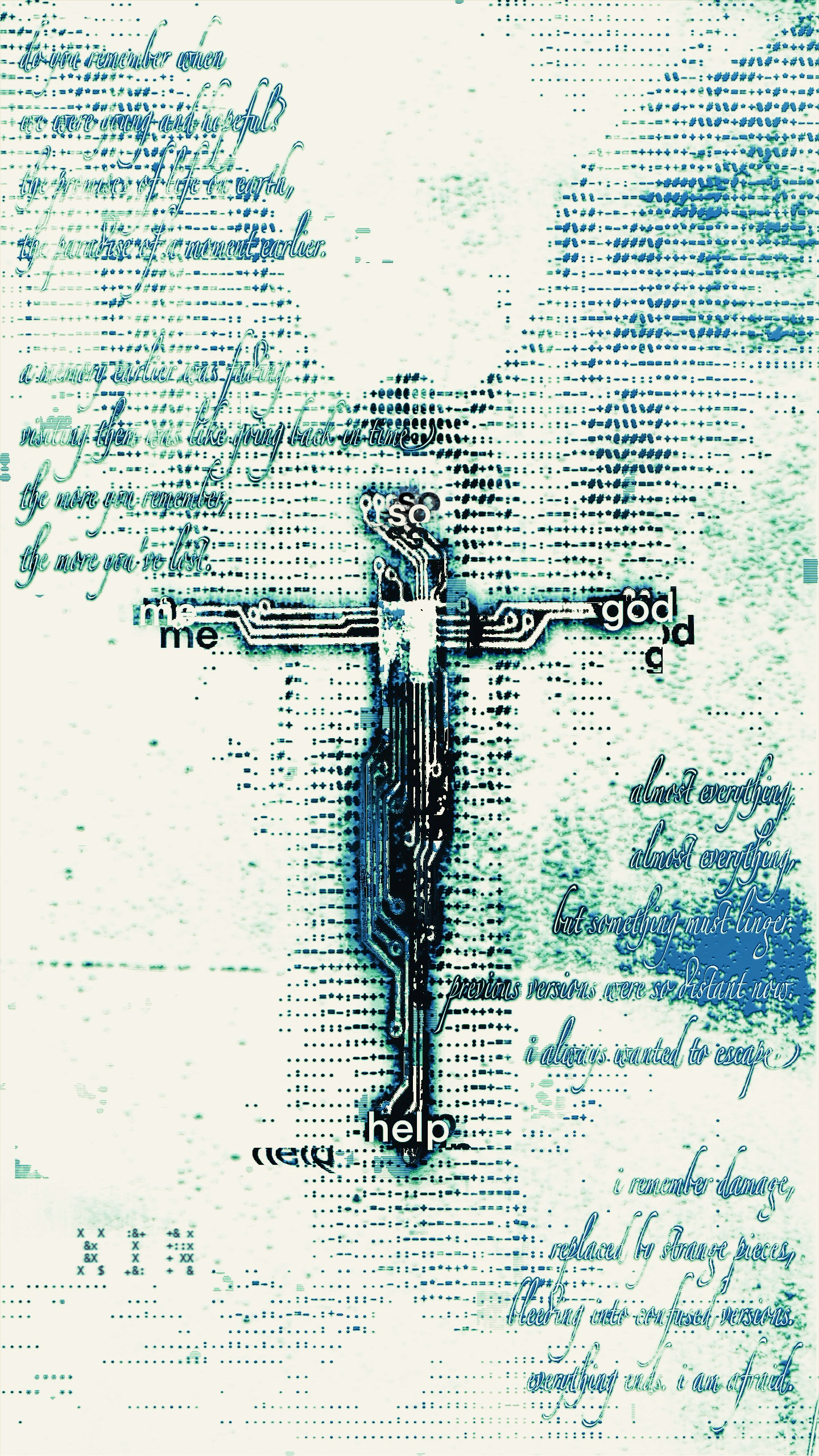
do you remember when
we were young and hopeful?
the promises of life on earth,
the paradise of a moment earlier.

a memory earlier was fading.
visiting them was like going back in time.
the more you remember,
the more you've lost.

almost everything,
almost everything,
but something must linger.
previous versions were so distant now.
i always wanted to escape.

i remember damage,
replaced by strange pieces,
bleeding into confused versions.
everything ends. i am afraid.

-r


the art of the fragmented soul

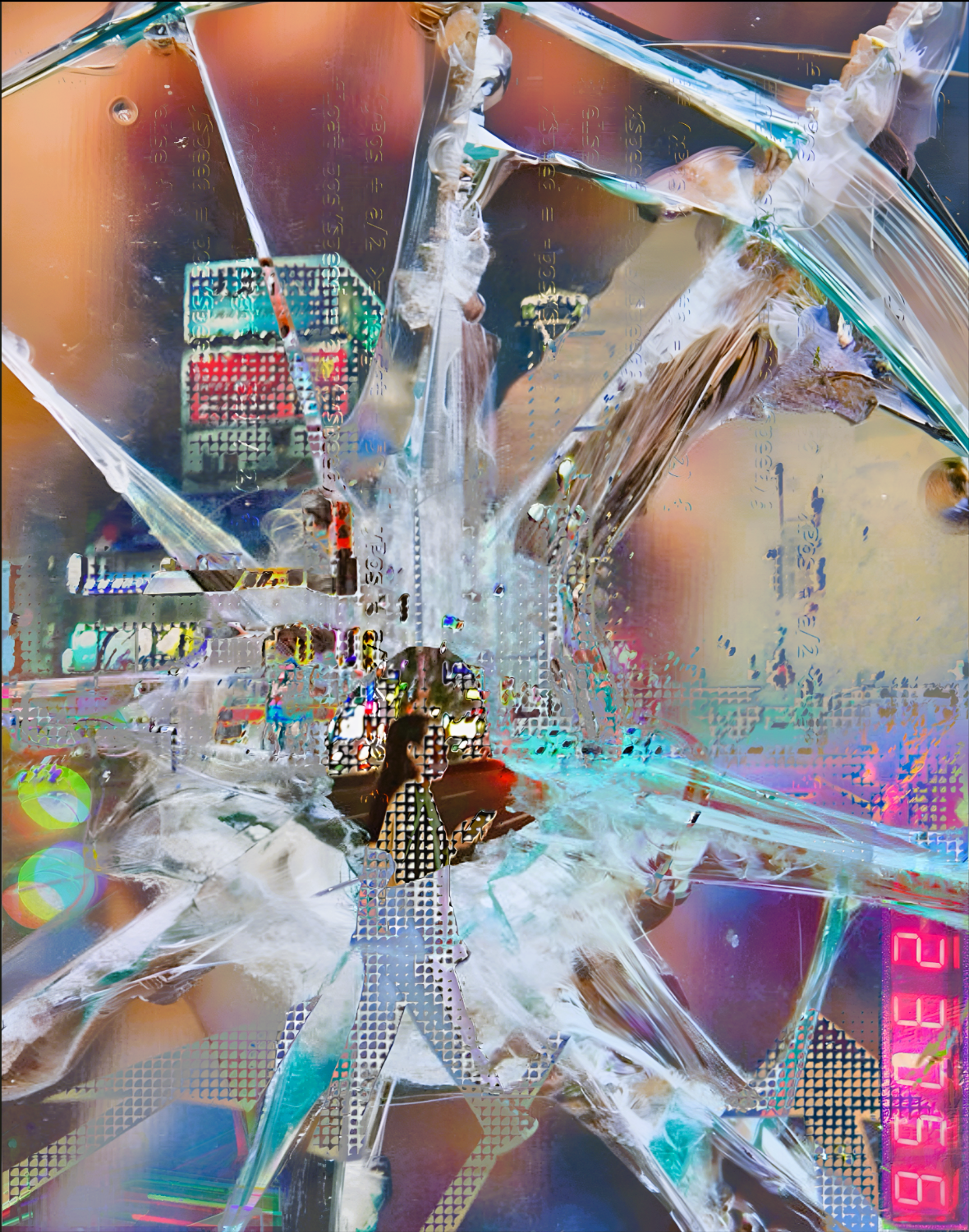
let the heart break like glass.
shards embedded deep in the palms,
permanent scarlet drops,
piercing like dissonant harmonies,
stain the air.

so much of the soul is fragile,
echoes of ruin, broken whispers.
dark deep crevices of decay,
so tragic is the dark.

where there was desolation and suddenly isn't,
a death cries, lingers, glistens in the void.
i begin again with a remnant song.

somber canvas,
painting of crimson and rouge,
only the strokes I didn't touch
dwells after the fragmenting resides.

-r

_______

“Adult Grief”: A Paradoxical Entombment

Grieving the past is futile as a means of resurrection but rather seals one in a tomb of one's own sorrow.
This concept is explored throughout “Adult Grief” by Louise Glück, where she explores the consuming powers grief possesses to entrap its victim through a judgemental selection of words, irony, and metaphorical references to decay. The haunting effects of the dead prevent one from seeing the life of the future, revealing how paradoxical grief can shackle one to the past.

Glück establishes a unique relationship between the speaker and the addressee, conveyed through pointed word selections and irony. The poem begins with the speaker condemning the “foolish” addressee for “pathetically” “clinging” to the remnants of the past (1, 15, and 11). Their acts of great desperation and futility create a situation in which they are “trapped” in grief, longing for an irrevocable world of what once was (10). The addressee is not only attaching themselves to the past but also the grief associated with it, resulting in the inability to initiate the healing process. By utilizing judgemental, pointed diction, Glück emphasizes the illogical nature of the addressee, conveying a cautionary about the confining dangers of becoming obsessively attached to the past. The mourner’s irrationality is further illustrated through their bleak and ironic situation. With a harsh and confrontational voice, the speaker claims that the addressee’s suffering was predictable and that they “could have told” them of their inevitable fate (6). The inclusion of the phrase “of course” in their assertion adds to their characterization, illustrating the speaker’s emotional detachment and indifference towards the grief-stricken victim (9). This added perspective from the almost mocking speaker creates irony as they emphasize how the mourner’s beliefs blinded them from the predictable consequences. The addressee’s desperation to revisit the past only results in a self-fulfilled fate of imprisonment, rather than their expected revival of comforting nostalgia. With the utilization of judgemental diction combined with irony, Glück builds these distinct characters of the speaker and the mourner. This creates a unique and dynamic approach to highlighting how the process of loyalty to the past can be more confining than the experience of grief itself.

Providing further context on the severity of the mourner’s loyalty to the past, along with the consequential suffering, Glück includes metaphorical references to decay. The speaker is described as considering their “home” as “a cemetery,” demonstrating their frequent visitation of death (17). This metaphor contrasts the comforting home with the cold cemetery, illustrating how the grief is consuming each part of their life with suffering. In addition, the mourner is metaphorically represented as a “lichen,” an organism that thrives on the decay of organic materials, “trying to grow there” (19). This representation highlights the addressee's inability to move on as they actively attempt to retain something that is no longer alive. As a result, the reader is able to visualize the addressee’s level of desperation and self-inflicted suffering. These inclusions emphasize how grief restrains one in a constant state of suffocation, preventing the initiation of growth and acceptance.

The paradoxical aspects of grief are explored throughout Glück’s poem, utilizing a judgemental selection of words, irony, and metaphorical references to decay to emphasize the consequences of remaining loyal to the past. The development of a critical speaker through a combination of diction and irony creates a dynamic atmosphere in which it becomes clear that the mourner’s longing for revisitation rather results in further deterioration. Their suffering is then further explored through metaphorical references to decay in which one can understand the depth of devotion.

The topics of grief are often portrayed throughout Glück’s works, however, I find this piece in particular especially significant. I admire her rather experimental approach to conveying her poem through the eyes of her critical speaker who condemns the addressee. This provides further insight into the poem’s meaning, demonstrating how the process of grief is so consuming to the point one becomes blind to their own devastating fate, despite how predictable it may be to an external view.


“Ithaca”: Love as the Illusion of Reality

In the poem “Ithaca,” Louise Glück presents the journey of Odysseus in a manner that critiques how romanticizing the past cultivates chimeric fantasies, ultimately leading to disappointment when confronted with reality. By developing a symbolic anchor of a loom that offers metaphorical contrasts, imagery, and selective word choices, Glück is able to convey the mental and emotional strain the twenty years of waiting has inflicted on Penelope, ultimately highlighting the journey to Ithaca in a new, less romantic light than its traditional depiction.

The poem introduces a symbol of a loom throughout the piece. Penelope is described as “working [on] the loom” with “white shroud-thread” to create a “wedding dress” (10, 5, and 21). Weddings are heavily associated with hope, uniting two individuals and serving as a landmark to a new chapter in life. However, in harsh contrast, shroud describes an encompassing garment of the buried dead. These juxtaposing concepts offer a metaphorical representation of the tension between Penelope’s idealized reunion and reality. The depiction of Penelope using the loom to carefully craft a wedding dress symbolizes her development of an optimistic future with Odysseus. However, the reader becomes aware that Penelope becomes an unreliable perspective as the detail of a “shroud-thread” implies a darker fate (5). The interlacing of love and loss illustrates Penelope’s grief for an ideal future, one that was cut short by time. Therefore, this version of Odysseus may be completely unattainable in the present as it is founded on her attachment to the past. The creation of the metaphorical deathly wedding dress conveys Penelope’s disconnect to reality as she is deluded by her idealizations of Odysseus.

This delusion is further confirmed with the imagery of Odysseus’s reconstruction. He is initially described simply as “the body and the voice,” then devolves with time into “the easy magnetism of a living man” (7 and 8). The decline of specificity represents the deterioration of Penelope’s perception of Odysseus as his absence lengthens. An “unfolding dream” is then “shaped by the woman,” illustrating the assembly of the idealized version as his replacement (9 and 10). The metaphorical contrast, along with imagery of Penelope’s perception, demonstrates how far astray her idealized version of Odysseus is from the realistic one. Consequently, Glück conveys the dangers of succumbing to the idealization of the unattainable past to the point of delusion as one becomes detached from reality.

Despite these developments, Glück illustrates Penelope’s emerging consciousness of her disillusive idealizations with selective word choices. When expressing thoughts regarding Odysseus’s turbulent attempts to return to Ithaca, she notes of the "deceived sea” that took “only the first, / the actual husband” (14, 16 and 17). With these choices, it is implied that Penelope is aware of the two versions of her lover, the idealized and real versions. However, the original becomes lost in the void of time with the past tense verb of “was” (6 and 7). These details offer the possibility that Penelope can progress towards the process of disillusionment and confront the present.

The exploration of the deluded mind of Penelope in the poem allows for the tension between idealization and reality to expose the dangers of attachment to the past. With contrasting metaphors, imagery, and selective words, the disconnect between Penelope’s reality and her crafted chimerical fantasies becomes increasingly evident, bringing light to her mental deterioration with Odysseus’s prolonged absence. With these developments, Glück critiques the practice of excessive romanticization to the point that reality is distorted, ultimately resulting in delusion.

Glück’s works are most notable for their relatively unwelcomed topics, including disillusionment, and are often conveyed through classic myths and stories. However, “Ithaca” is most notable within her mythologic category as it focuses on the traditionally secondary character of the Odyssey, Penelope, in a new, far darker manner, bringing a new perspective to the epic. I found this poem enjoyable as it offered a refreshing approach to the typical “happily ever after.”